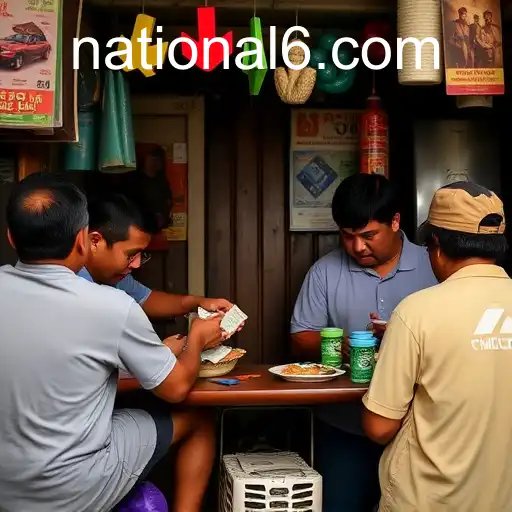
Understanding Jueteng: A Closer Look at an Enduring Illegal Enterprise
Jueteng, a widely recognized illegal numbers game in the Philippines, has long been a contentious issue, weaving complexity into the socio-economic and political fabric of the nation. Despite numerous government efforts to curtail its influence, the game persists, largely due to its deep-rooted cultural allure and the financial incentives it promises both bettors and operators.
Historical Roots of Jueteng
The origins of Jueteng can be traced back to the Spanish colonial period in the Philippines. It evolved from similar lottery-type games played in Spain, adapting over time to become uniquely ingrained in Filipino society. Over the decades, Jueteng has thrived, largely due to its ability to cater to the gambling desires of a population eager for the chance of a windfall.
The game traditionally involves a simple mechanics of choosing a combination of numbers which, if selected in a draw, win the bettor a cash prize. This simplicity has been a crucial factor in its widespread appeal among the masses.
The Mechanics of Jueteng
Central to the operation of Jueteng is the role of the 'cabo' or coordinator who collects bets from players and transmits them to the 'kubrador' or collectors. The collected bets eventually reach the 'jueteng lords' who orchestrate the entire operation. Winning numbers are typically drawn through rudimentary methods such as the use of numbered balls.
This systematic structure underscores the efficiency with which Jueteng operates, with operators employing various techniques to ensure the anonymity and fluidity of monetary transactions. Its enduring presence is largely attributed to its ability to concoct a seamless network involving ordinary citizens to high-level operators.
Economic Impact and Community Dynamics
Economically, Jueteng generates significant sums of undeclared and untaxed revenue. For many communities, where opportunities for income are sparse, the game provides a means of supplementary livelihood. The promise of a sudden financial windfall entices many into participating, and Jueteng becomes a source of both hope and division within communities.
The informal systems of credit and bet placements foster an economic ecosystem that, while illegal, contributes to the survival of numerous local economies. The impact is such that calls for the legalization of Jueteng have surfaced periodically, arguing that formalizing the enterprise could lead to better regulation and revenue generation for local governments.
Political Influences and the Struggle for Reform
Politically, Jueteng has become a perennial issue that has confounded numerous administrations. Its infiltration into political circles is evident with accusations and controversies arising frequently about politicians benefiting from Jueteng operations through kickbacks and protection rackets.
The interplay between politics and Jueteng is often one of neglect and complicity, forming a cycle that hampers genuine reform efforts. Legislative attempts to address the problem, ranging from stringent law enforcement to advocacy for legalization, have been met with limited success due to institutionalized corruption and political patronage.
Social Implications and Public Perception
Socially, Jueteng presents a dichotomy; it is both a staple of cultural identity in many areas and a scourge highlighted by advocates of social reform. Its acceptance in many communities underlines the socio-economic inequalities faced by the population, wherein gambling is seen as a viable solution to poverty and hardship.
The public perception of Jueteng varies significantly based on socio-economic status and geographical location. In areas severely affected by poverty, Jueteng is often viewed less as a menace and more as a necessary evil—a perception that underscores the complex ethical considerations surrounding any attempts to curb its influence.
The Role of Media and Public Discourse
Media coverage of Jueteng has played a significant role in shaping public discourse, often emphasizing its detrimental impact on society and its links to corruption. High-profile scandals involving politicians have periodically thrust Jueteng into the national spotlight, driving public interest and sparking debates about potential solutions.
The ongoing dialogue facilitated by media coverage remains crucial in educating the public about the realities of Jueteng, though much of the conversation remains polarized between proponents of eradication and those advocating for legalization and regulation.
Conclusion: Navigating the Future of Jueteng
Understanding Jueteng requires navigating a labyrinth of cultural, economic, and political dynamics that have allowed it to persist for so long. As discussions about its future continue, stakeholders must consider not only the legal ramifications but also the socio-economic realities that keep Jueteng embedded in Filipino society.